


 Sometimes it’s just fun to watch a good thinker think.
That’s the case with the article “Cosmologically Unique IDs” by computer scientist Jason Fantl.
In it, he ponders the nature of UUID (Universally Unique Identifiers). The ones that you and I are accustomed to using have 22 bits of data, and they operate on a principle of randomness. Here’s a UUID, generate with the uuid utility on Debian Trixie (13.3 to be specific):
79aaa354-0d3b-11f1-acc4-101010105263
If you run the uuid utility on your system, it’s incredibly unlikely that you’ll get that same UUID.
How unlikely? As Jason puts it:
The probability of you being struck by a meteorite right now is small but non-zero, and you might even call that a “reasonable” (if paranoid) concern. But are you worried that every human on Earth will be hit by a meteorite right now? That probability is also non-zero, yet it is so infinitesimally small that we treat it as an impossibility. That is how small we can make the probability of an ID collision.
And we rely on that.
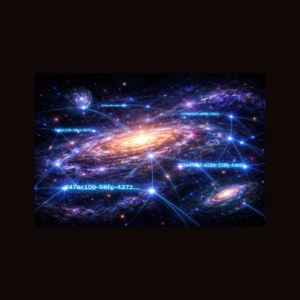
But that’s just for Earth. What if mankind spreads out across the stars? What if in the future there are billions of planets, each of which need UUIDs?
The article observes that just using bigger UUIDs will work. And though it’s not stated, the number of times when you’re going to need to compare UUIDs between millions of light years to make sure there’s no collision also works in your favor.
But what if you just had to be sure that UUID collisions were not just incredibly, incredibly unlikely but actually impossible? That’s what the rest of the paper tackles, and it’s a long fascinating journey into all the possibilities.
You’ll learn something, I guarantee it, and enjoy the journey!
Related Posts:
Swap Is Back: High RAM Prices Are Bringing Back an Old Technology
2026: The Breakthrough Year for Rust
Looking Back at 2025: What a Wild Year! Our Recap of the Year's Biggest Moments
Ten Cool Linux Command Line Tricks for the Journeyman Practitioner
How to Stretch a 10GB VPS Disk: Compressed Folders, tmpfs, and Space-Saving Magic
What Happens When You Run a VPS with Zero Swap?

raindog308 is a longtime community LETizen, technical writer, and self-described techno polymath. With deep roots in the *nix world, he has a passion for systems both modern and vintage, ranging from Unix, Perl, Python, and Golang to shell scripting and mainframe-era operating systems like MVS. He’s equally comfortable with relational database systems, having spent years working with Oracle, PostgreSQL, and MySQL.
As an avid user of LowEndBox providers, raindog308 runs an empire of LEBs, from tiny boxes for VPNs, to mid-sized instances for application hosting, and heavyweight servers for data storage and complex databases. He brings both technical rigor and real-world experience to every piece he writes.
Beyond the command line, raindog308 has a life-long love of German Shepherd Dogs, high-quality knives, target shooting, theology, tabletop RPGs, playing guitar, and hiking in deep, quiet forests.
His goal with every article is to help users, from beginners to seasoned sysadmins, get more value, performance, and enjoyment out of their infrastructure.
You can find him daily in the forums at LowEndTalk under the handle @raindog308.
















Leave a Reply