

 Remember Freenom?
For years, Freenom was the place you went when even ten bucks a year for a domain name seemed like too much money. You could register a domain for free. Not a subdomain, not a trial, but an actual domain name. Well, sort of.
Freenom became famous for giving away domains under five country-code extensions: .tk for Tokelau, .ml for Mali, .cf for the Central African Republic, .ga for Gabon, and .gq for Equatorial Guinea. Millions upon millions of them were registered.
Heck, I had a .tk for a while. Why not? They were free.
For hobby projects, test sites, personal pages, and random VPS experiments, they were irresistible. Unfortunately, they were also irresistible to spammers, scammers, phishers, malware operators, and pretty much anyone else whose business model benefited from domains costing exactly $0. And they were mostly bad actors.
By early 2024, Freenom appeared to be dead. Millions of domains disappeared. Its ICANN registrar accreditation was terminated. Several countries had taken back their TLDs. Meta had sued the company. Freenom itself said it was leaving the domain business.
But now Freenom is back. So what happened?
It All Started With .tk
The Freenom story really begins with Tokelau, a tiny group of Pacific islands that is a dependent territory of New Zealand. Its population is only around 1,500 people, and its country-code top-level domain is .tk.
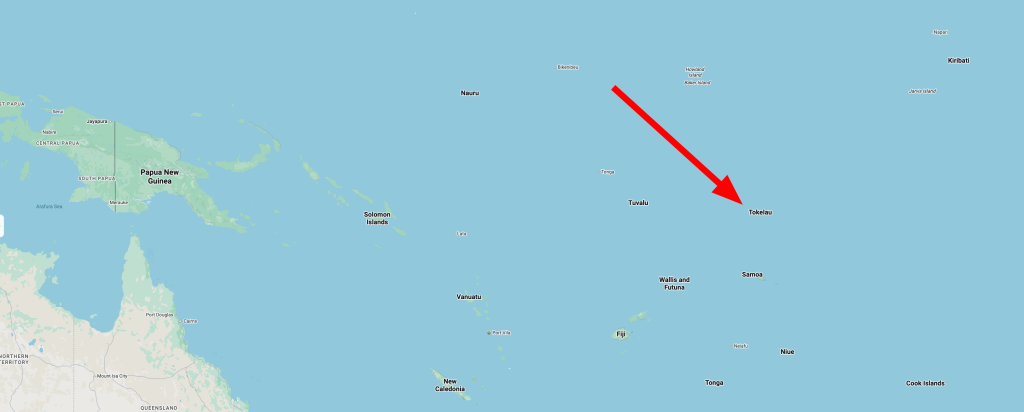
Dutch entrepreneur Joost Zuurbier became involved with .tk around the beginning of the 2000s and launched what became known as Dot TK. The idea was unusual for the time: instead of charging people to register domains, Dot TK would give them away.
It’s hilarious to me how reality works. A small group of islands in the South Pacific controlled a top-level TLD because that’s how the borders shook out over ten thousand years of history. But I digress.
How Do You Make Money Giving Away Domains?
Believe it or not, the .tk idea actually made a lot of business sense.
First, if you registered a free Freenom domain, you did not receive quite the same rights you would get from registering a normal paid domain. Free users did not have normal transfer rights, and Freenom reserved the ability to deactivate names under various circumstances.
When people abandoned their free domains, Freenom could reclaim them. Those abandoned domains sometimes continued receiving traffic from old links, bookmarks, search engines, typo traffic, and other sources. Freenom could monetize that residual traffic with advertising.
Freenom also hoped to make money by selling users other services, including hosting, SSL certificates, and conventional paid domains. It was basically the old free web hosting business model applied to the DNS system.
This was not a “become a unicorn and make billions” kind of venture. But since the costs were so insanely minimal, nearly any marginal revenue was profitable.
And It Got Huge
The .tk experiment worked well enough that Freenom started exporting the concept. In 2013, Mali opened .ml registrations through Freenom. Gabon followed with .ga, and the Central African Republic joined with .cf. Equatorial Guinea added .gq in 2014.
Freenom now had five country-code extensions it could give away.
The numbers became enormous. By the end of 2013, Freenom claimed more than 20 million active domains. By 2014, the company claimed more than 28 million. At one point, .tk was reportedly one of the largest top-level domains on the entire Internet.
That is a bit mind-blowing. The largest TLD! I mean, sure, I guess when you give something away for free, it will become popular. But still…Tokelau has roughly 1,500 residents, yet its domain extension had tens of millions of registrations.
But of course, there were problems.
Free Is Also a Fantastic Price for Criminals
Suppose you’re creating a personal blog. You can buy a .com for $10 or $15 a year, or you can get a .tk for free. That’s nice, but saving $10 probably isn’t going to change your life. And you probably want a .com or a .org just for prestige reasons.
Now imagine you’re running a phishing operation and you burn through 10,000 domains. Suddenly, the difference between $10 and $0 matters quite a bit.
That was the fundamental problem with Freenom’s model. Free domains created enormous opportunities for legitimate experimentation, but they created even better economics for people who needed huge numbers of disposable domains.
And who is that? Spam campaigns, phishing pages, fake login screens, malware distribution, scam sites, and their fellow travelers. If every domain costs money, abuse has a marginal cost. If domains are free, that marginal cost disappears. That’s why there are billions of email spam messages sent every day but you never get a billionth of that number in your snail mailbox.
A 2023 Interisle study found that more than 223,000 Freenom domains were used for phishing during 2022. That represented roughly 14 percent of all phishing domains in its dataset. All five Freenom extensions ranked among the seven TLDs with the most phishing activity.
At one point, Freenom domains reportedly represented around 60 percent of the phishing domains observed across all country-code TLDs.
Abuse Wasn’t Freenom’s Only Problem
This reputational problem meant that Google was hostile to letting .tk domains hosts its ads and it down-weighted results from that domain as well. And ICANN’s massive expansion of new generic TLDs created far more competition in the domain market.
So both the “old domains steered into advertising parking sites” plan and the “people will pick the domain and we’ll sell them add-on products” plans no longer worked.
Another major problem was that Freenom didn’t actually own these TLDs. .ga belongs to Gabon. .ml belongs to Mali. .cf belongs to the Central African Republic. .gq belongs to Equatorial Guinea. .tk belongs to Tokelau.
Freenom operated them through arrangements with the relevant governments or registry authorities. That works only as long as those governments are happy with the arrangement. Eventually, some weren’t.
Gabon terminated its relationship with Freenom in 2023 and moved management of .ga back under Gabonese control with assistance from French registry operator Afnic. Mali’s 10-year agreement for .ml expired in July 2023 and was not renewed.
Then Meta Showed Up
Facebook parent Meta sued Freenom in late 2022, with the case becoming public in 2023. Meta alleged that Freenom had failed to adequately address widespread phishing, cybersquatting, and trademark abuse involving names impersonating Facebook, Instagram, WhatsApp, and other Meta properties.
The complaint pointed to thousands of abusive registrations and cited the terrible abuse statistics surrounding Freenom’s TLDs.
Now, these were just allegations. I mean, yes, they were true, but legally they were just allegations. No one appointed Meta (of all people) to be the Internet Police, but if you’re Freenom and you’re staring down the endless resources of Meta’s legal department, you settle.
The lawsuit arrived at a very bad time for Freenom. The company’s original economics were deteriorating, its abuse reputation was terrible, countries were reclaiming their namespaces, and now one of the world’s largest technology companies was suing it.
Early in 2023, Freenom effectively stopped accepting new domain registrations.
ICANN Had Its Own Problems With Freenom
There was another part of Freenom’s business that often gets confused with its free ccTLD operation.
Freenom also operated an ICANN-accredited registrar called OpenTLD. That business could register normal generic domains such as .com and .net. Those registrations were separate from Freenom’s role operating country-code registries such as .tk.
ICANN eventually terminated OpenTLD’s registrar accreditation in November 2023. ICANN cited multiple unresolved compliance problems, including failures involving registration records, renewals, transfer authorization codes, and accreditation fees. OpenTLD’s generic-domain customers were eventually transferred to Gandi.
Then 12.6 Million Domains Vanished
February 2024 was the real apocalypse. Within a matter of days, huge numbers of Freenom domains stopped resolving. Netcraft measured approximately 12.6 million domains disappearing across .tk, .cf, and .gq.
That represented a roughly 98.7 percent month-over-month collapse in resolvable domains across those extensions.
Imagine running a project on a free .tk domain for years and suddenly discovering that your domain simply doesn’t work anymore.
I mean, yes, you were kind of an idiot anyway to build a project that depended on .tk. But still.
Freenom Says Goodbye
On February 12, 2024, Freenom announced that it had settled its litigation with Meta. The settlement terms were confidential. Freenom also said it had independently decided to exit the domain-name business, including its registry operations.
After more than two decades, the free-domain experiment was over. Millions of domains had disappeared. .ml and .ga were gone. OpenTLD had lost its ICANN accreditation. Freenom had stopped new registrations. Meta’s lawsuit had been settled.
But Now Freenom Is Back
Fast-forward to 2026. Freenom is now selling domains again. But this time, the domains aren’t free anymore.
Freenom is currently offering registrations under .tk, .cf, and .gq, with prices starting at roughly €8 per year depending on the domain. .ml and .ga are no longer part of the Freenom portfolio. Freenom looks surprisingly similar to every other domain registrar.
And…I guess I’d say good luck with that? It’s not like being a domain registrar is a wild land rush opportunity. We recently covered Porkbun’s business model: sell domains at cost, sell add-on services. That’s where the money is, not in domain registrations. How is Freenom going to compete? I guess we’ll see.
The Great Free Domain Experiment
While I wouldn’t invest in Freenom in 2026, the company does deserve a strange place in Internet history.
For more than two decades, it tried something genuinely radical: why should domain names cost money at all? For a while, the answer appeared to be that perhaps they shouldn’t.
Millions of people registered free domains. Kids launched their first websites. Developers created test projects. VPS users spun up random servers. People who would never have purchased a domain got one. There was something genuinely fun about it.
But then, tragedy-of-commons-style, bad actors ruined it.
Maybe domain names cost money for a reason.
Related Posts:
The Week Big Tech Failed Me: Google and Meta Both Outdone by a $10/Year Provider
AI Fraudster Matt Shumer Wrote "Something Big is Happening" and He Should Be Ashamed
Looking Back at 2025: What a Wild Year! Our Recap of the Year's Biggest Moments
Is Meta Discontinuing the Free LLaMA Model Series? News Reports Suggest LLaMA Drama
Happy One Year Birthday, Threads! We're Sorry You Failed
Meta Ditches Its Responsible AI Team in Bid to Exploit Irresponsible AI

raindog308 is a longtime community LETizen, technical writer, and self-described techno polymath. With deep roots in the *nix world, he has a passion for systems both modern and vintage, ranging from Unix, Perl, Python, and Golang to shell scripting and mainframe-era operating systems like MVS. He’s equally comfortable with relational database systems, having spent years working with Oracle, PostgreSQL, and MySQL.
As an avid user of LowEndBox providers, raindog308 runs an empire of LEBs, from tiny boxes for VPNs, to mid-sized instances for application hosting, and heavyweight servers for data storage and complex databases. He brings both technical rigor and real-world experience to every piece he writes.
Beyond the command line, raindog308 has a life-long love of German Shepherd Dogs, high-quality knives, target shooting, theology, tabletop RPGs, playing guitar, and hiking in deep, quiet forests.
His goal with every article is to help users, from beginners to seasoned sysadmins, get more value, performance, and enjoyment out of their infrastructure.
You can find him daily in the forums at LowEndTalk under the handle @raindog308.

















Leave a Reply